Workflow automation
Move information between tools and trigger repeatable actions with validation, error handling and a clear recovery path.
 CodesKitchen← Back to homeStart a project ↗
Connect AI to a task your customers or team need to complete. We develop AI application features, assistants and automated workflows, with clear inputs, review steps and running costs considered from the start.
Discuss your AI workflowMove information between tools and trigger repeatable actions with validation, error handling and a clear recovery path.
Help customers and teams find answers with AI assistants tailored to your content, services and business workflows.
Extract, organize or draft information while keeping appropriate human review in the process.
Creating a useful AI product takes more than connecting a model API. Your users need a clear interface, accounts, creation history and predictable handling when a generation fails. Your team needs administration tools and visibility into usage.
Connect video, image or voice services through supported APIs. Define inputs, job status, outputs and download flows around the capabilities of the selected provider.
Manage user accounts, usage allowances and transaction history with clear billing rules and recovery flows for failed requests. Connect a suitable payment provider when your product needs checkout.
Keep API credentials on the server, handle provider errors and define administration access. Document deployment, service accounts and ongoing responsibilities.
For Viral Clone, we developed five AI content tools, English and Chinese workflows, generation history, points based usage and an administration panel. The project also includes a companion desktop application.
Discuss your AI workflow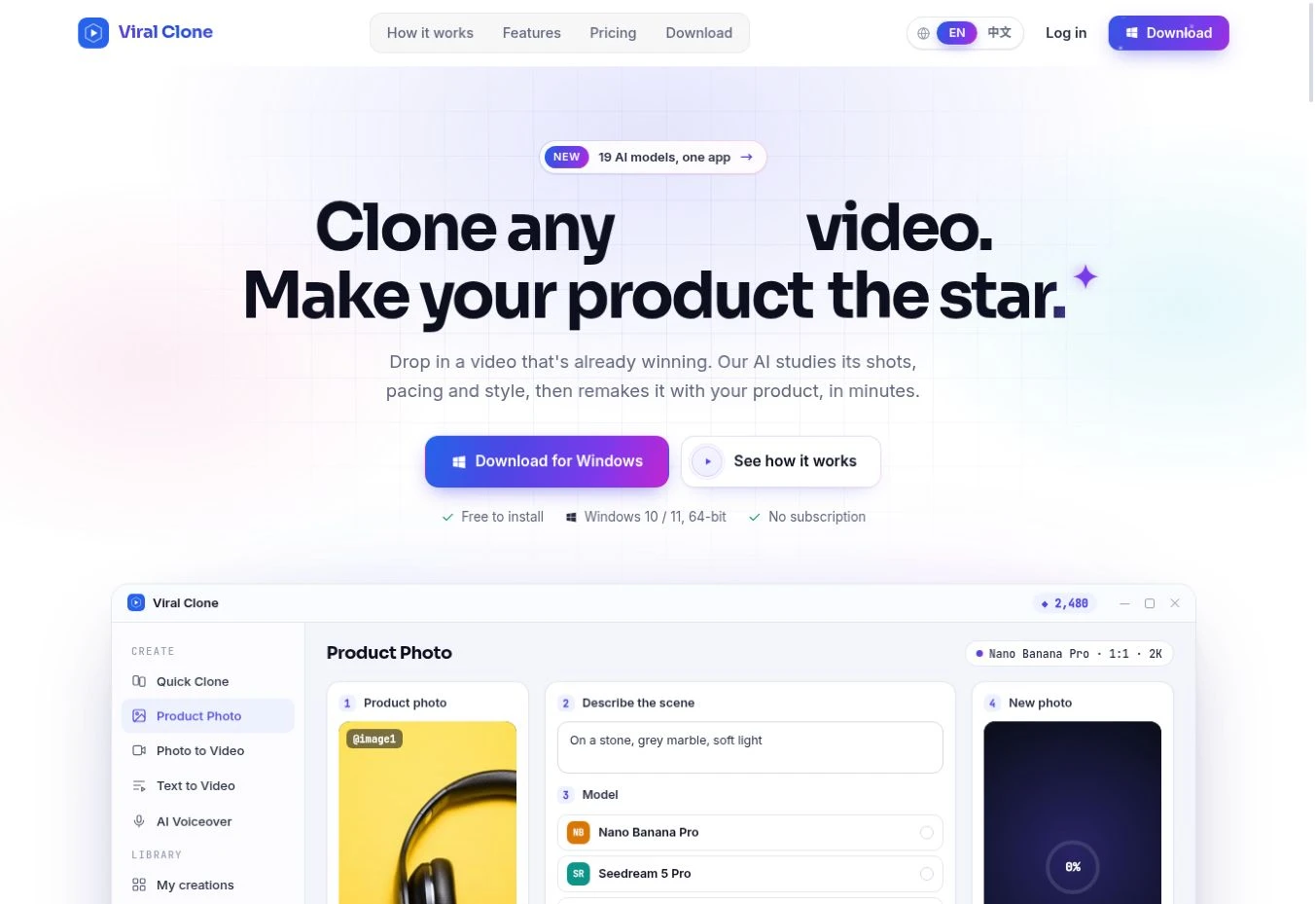
We choose a repeatable task, define the expected output and test representative examples. Where an AI response can be uncertain, the workflow should make review and correction straightforward. Model usage and third-party service costs are discussed before launch.
Understand your goals, audience and essential features.
Shape the layouts, visual direction and user experience.
Build your product with regular progress updates and feedback.
Test the key journeys, prepare for launch and guide your team.
No. A rules-based integration can be simpler and more predictable. We recommend AI when it adds value to the specific task.
That depends on their APIs, permissions and account plans. We confirm access and integration limits before committing to a workflow.
Model calls, hosting and connected services may have separate charges. We document the expected usage assumptions and clarify who owns each account.
Yes. We build AI content platforms using supported video, image and voice APIs, with user accounts, creation libraries, usage controls and administration tools. Our Viral Clone case study shows an example of this work.
The number of tools, account roles, billing rules, integrations and interface complexity affect development scope. Model usage, hosting and external service subscriptions are separate running costs. We prepare a proposal after reviewing your requirements.
Yes. We work remotely with businesses worldwide, with clear communication, regular reviews and delivery arrangements tailored to each project.
Define the core workflow, supported inputs, API dependencies, usage costs and failure handling before development begins.
Describe one task you want to automate, the information it uses and what a useful result looks like. We’ll assess the integration, review steps and service costs before proposing a first release.
An AI feature also needs an interface, a data flow and a way to handle errors. We review provider access, running costs, expected outputs and fallback behaviour as part of the project scope.
For an AI chatbot or internal assistant, agree the knowledge sources, permitted actions and escalation route before selecting the model. A public FAQ assistant and an assistant that changes customer records need different controls.
Identify the content the assistant can use, who keeps it current and what it should say when the information is missing.
Define which operations are allowed, the permissions required and when a person must review an action.
Agree representative questions, refusal cases, handover behaviour and usage-cost assumptions. Test against those examples before release.